


 0
0


Low-Maintenance Lawn Ideas for Busy Homeowners
News- 11 - 06 - 2026
- Anco Turf Lawn Care Turf News
A well-maintained lawn doesn’t have to mean hours of work every week. With the right turf variety and a few considered landscaping decisions, you can have an attractive, functional outdoor space that stays healthy through the seasons – without constant upkeep. From drought-tolerant grass varieties to practical ground covers and smart garden design, there are real, proven ways to reduce the high-maintenance needs while still looking its best all year round
Introduction
It is only natural that you want an outdoor space that is beautiful, functional, and well-maintained. It is equally fair that you do not want to spend every free weekend taking care of it.
Traditional lawns are high-input and manicured – regular mowing, watering, fertilising, and weed control are the basics to keep them in good shape. And with Australia’s dry summers and water restrictions, maintaining a healthy lawn is a never-ending commitment that makes you wonder if the labour and time are even worth it.
But what’s the solution? It’s replacing traditional turf with alternatives that need much less care. And remember this – low maintenance does not mean poor appearance. Choosing the right turf variety, preparing your soil well, and designing your space practically can significantly reduce the weekly lawn maintenance. This guide covers the best turf options, care strategies, landscaping ideas, and alternatives to help you build an outdoor space that does not need your every weekend.
What Makes a Lawn Low Maintenance?
A low-maintenance lawn is one designed to need less – less water, less fertiliser, and less labour – while still performing well through the seasons.
Key characteristics include:
- Slower growth habit, which reduces mowing frequency
- Drought tolerance to withstand dry periods without intervention
- Dense growth that naturally suppresses weeds
- Strong resistance to pests and disease
- Reliable recovery from everyday wear and foot traffic
Choosing the right grass before laying grass turf is the most important step here – that single choice has a greater impact on long-term maintenance than almost anything else.
Best Grass Types for Low-Maintenance Lawns
Buffalo Grass
Buffalo grass ranks among Australia’s most widely used low-maintenance turf varieties. Its dense growth naturally suppresses weed growth; it’s reliable even in shaded conditions, and it maintains its appearance in limited water far better than its alternatives. Buffalo grass thrives even with lower mowing frequency – a great advantage if you have busy schedules.
Couch Grass
Couch grass is known for its durability and excellent recovery from wear. It’s no surprise, then, that it is common in high-traffic areas, even when it requires more frequent mowing than buffalo. If you have an active lawn, its ability to recover makes it a practical choice.
Kikuyu Grass
Kikuyu is fast-growing and takes heavy use in its stride – for a household with children and pets, this variety lasts much longer than the others. Yes, it needs more frequent mowing than some other varieties, but the durability is worth it.
Zoysia Grass
Zoysia is an increasingly popular choice for homeowners who want minimal ongoing care. Its slow growth reduces mowing requirements considerably, its density suppresses weeds effectively, and once established, it handles dry periods well. For water-conscious households, it is their best bet.
How to Reduce Lawn Care Time Without Sacrificing Appearance
Choosing the right grass variety addresses most of the problem. A few consistent practices handle the rest:
- Mow at the correct height for your variety – cutting too short stresses the grass and creates conditions that make it easier for weeds to establish.
- Water deeply and infrequently rather than little and often; shallow watering produces shallow roots, which increases your lawn’s dependency on irrigation over time.
- When you buy lawn fertiliser, choose a slow-release formula – it delivers consistent nutrition across weeks, requires fewer applications, and produces more stable results.
- Before laying grass, add organic matter to your soil; better soil structure holds moisture longer and reduces how often you need to water and feed.
- You can install drip irrigation or a smart sprinkler system as part of your watering system, too.
- Seasonal aeration, mulching, and early weed management keep minor issues in check.
Drought-Tolerant Lawn Solutions for Australian Homes
Dry summers and water restrictions are a practical reality across much of Australia. A lawn that can withstand extended dry periods is an ally, not just convenience.
Buffalo, zoysia, and selected couch cultivars push their roots deep into the soil profile, so they continue drawing moisture long after the surface has dried out. Soil preparation supports this further – organic matter improves water retention so your lawn makes better use of every rainfall or irrigation cycle.
Watering in the early morning reduces evaporation. A weather-based irrigation controller handles condition monitoring for you and reduces water waste over time. A drought-tolerant turf pays off for your lawn, your water bill, and the environment at once.
Artificial Turf vs Natural Grass: Which Requires Less Maintenance?
Artificial Turf
Artificial turf removes mowing, fertilising, and a big portion of watering from your schedule. For small or low-use areas, it thrives even on minimal upkeep. Just be mindful – the higher upfront investment and considerable heat retention are trade-offs, as artificial surfaces become very hot during Australian summers, limiting how usable the space actually is.
Natural Turf
Natural grass cools its surroundings, promotes natural drainage, and repairs itself when damaged. The right low-maintenance variety keeps ongoing care genuinely manageable.
Which is right for you? Artificial turf is for those who want to cut back on maintenance hassle. But if you value a natural appearance, a cooler outdoor environment, and a surface that regenerates over time, a well-chosen natural turf variety remains the better long-term answer.
Alternatives to Traditional Lawns Explained
Not every outdoor area requires full grass coverage. Many homeowners reduce their maintenance load by incorporating alternatives alongside – or instead of – traditional lawn:
- Native gardens: Australian natives are adapted to local conditions and need minimal water or intervention once established
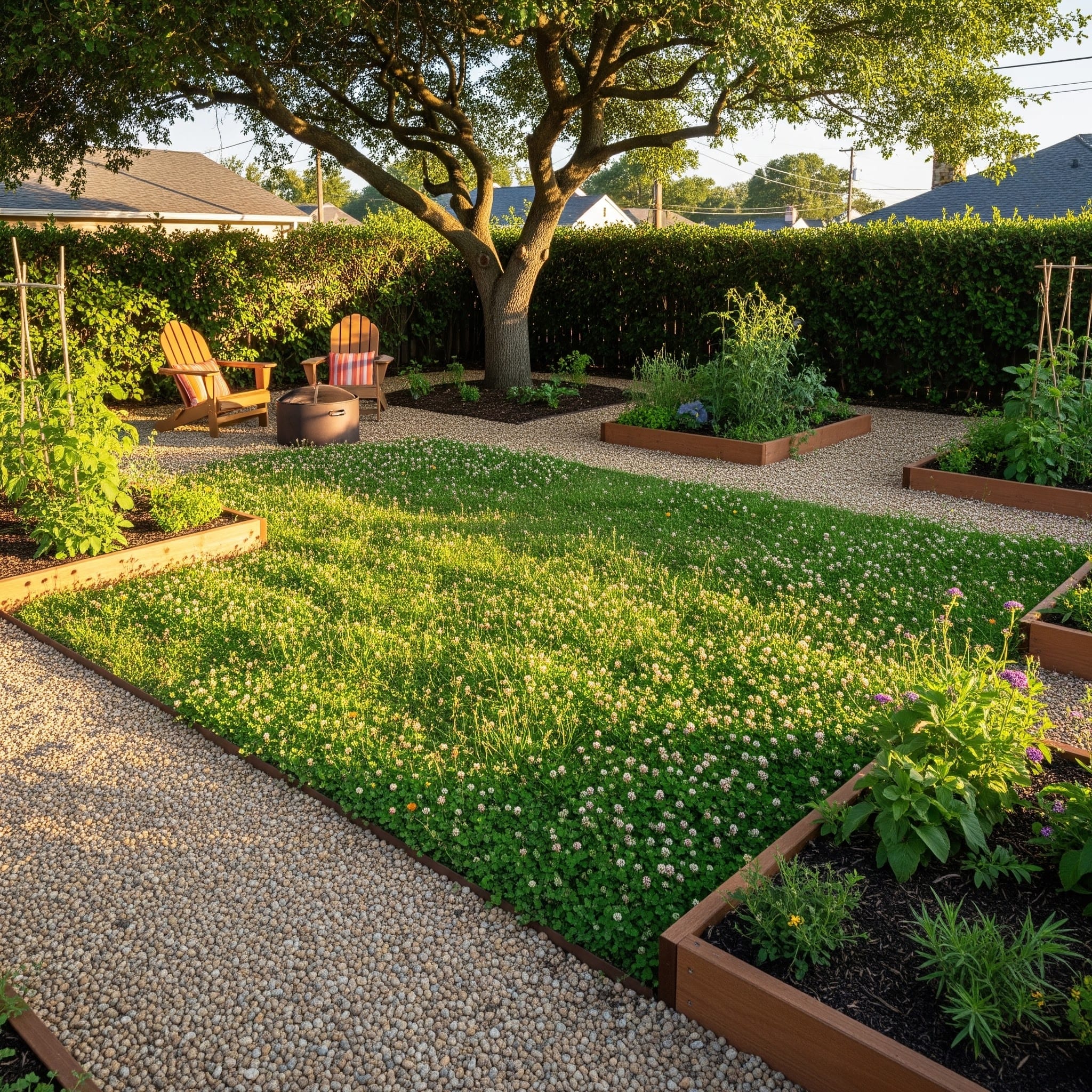
- Gravel landscapes: Practical for pathways and side yards; no mowing and very low water needs
- Decorative mulch areas: Suppresses weeds, retains moisture, and maintains a tidy appearance with little ongoing effort
- Mixed turf and garden designs: A smaller lawn area combined with garden beds and hardscaping reduces maintenance while preserving functionality
Best Ground Cover Plants for Lawns and Garden Spaces
Ground covers are worth considering in areas where grass performs poorly – under trees, on slopes, or along narrow paths and fences.
- Native Violet: Dense green coverage with purple flowers; handles partial shade and light foot traffic well
- Creeping Boobialla: A hardy Australian native suited to coastal conditions with very little ongoing care required
- Dichondra: Soft, carpet-like appearance; performs best in mild climates with moderate foot traffic.
- Creeping Thyme: Fragrant with seasonal flowers; very low water needs once established and best in full sun
- Pigface: Drought-tolerant with vibrant flowers; well suited to hot and coastal gardens but not appropriate for high-traffic areas
Easy Landscaping Ideas for Small Gardens
Small gardens work very well with a clear, planned design. With different zones, your garden is now much more functional and manageable. Plus, raised garden beds reduce weed pressure and make ongoing maintenance more accessible.
Selecting plants that hold their natural form reduces trimming requirements. Combining turf with pathways, patios, or decorative stone reduces total lawn area while making the space more practical and visually considered. A simpler garden is almost always easier to maintain well.
How to Create a Low-Upkeep Backyard That Looks Great Year-Round
Start with the right lawn.
Your turf variety determines more about long-term maintenance than any other decision – choose one suited to your climate, sun exposure, and how the space gets used. Taking the time to prepare properly before laying grass turf will also reduce ongoing maintenance needs.
Reduce high-maintenance features.
Plants and design elements that need frequent pruning, watering, or replacing will cost you time every season. Simpler layouts are easier to maintain well.
Use drought-tolerant plants.
Outside the turf, Australian natives are a practical starting point – they perform well with minimal irrigation once established.
Add functional hardscaping.
Having patios, pathways, and gravel areas reduces the lawn you need to maintain. And they also make the space more usable.
Plan for the long term.
The right plants and durable materials are always worth their cost in reduced effort over the years.
Conclusion
A low-maintenance lawn is more about making the right choice than putting in more effort. Choose a turf variety suited to your conditions and lifestyle. Buy lawn fertiliser formulated to deliver results over an extended period. Prepare your soil properly before laying grass, and install irrigation that manages watering efficiently without ongoing manual input.
Whatever your goal – reducing mowing time, lowering water use, or reclaiming your weekends – the right lawn setup makes it achievable.
Anco Turf supplies a quality range of turf varieties suited to Victorian and Australian conditions, so that you have a reliable helping hand by your side.
FAQs
What are the best grass types for low maintenance?
Buffalo and Zoysia are some good grass types for most Aussie lawns. Buffalo turf needs less mowing and works well even in shade. Zoysia turf grass grows slowly and can withstand dry periods – a practical choice for regions where water is limited or restricted.
Are artificial turf good for low-maintenance lawns?
Artificial turf reduces the need for regular mowing and fertilising, but the upfront cost is high, and it can get quite hot in summer. For most Australian homes, a well-chosen natural turf variety offers a better long-term balance.
How can I reduce the time spent on lawn care?
Choose the right turf variety from the start, water deeply but infrequently, and use a slow-release fertiliser. These three decisions alone remove routine lawn care work.
What are alternatives to traditional grass lawns?
Native gardens, gravel landscapes, decorative mulch, and ground covers are all practical options. Many homeowners combine these with a smaller turf area to reduce total maintenance while still having a pretty lawn.
Do low-maintenance lawns save water?
Yes – drought-tolerant varieties like Zoysia and Buffalo develop deep root systems that access soil moisture more efficiently. Schedule early-morning watering and use a smart irrigation system, and your water consumption is significantly reduced.
Are native plants better for easy lawn care?
In most cases, yes. Australian natives grow in conditions they already know – local climate, local soil – so they need far less water and attention once they’re in the ground. For garden beds and borders, they’re a dependable low-effort choice.
How often should a low-maintenance lawn be maintained?
Zoysia might only need mowing every two to three weeks; other varieties will vary. Outside of mowing, a seasonal fertiliser application, annual aeration, and occasional weed checks will keep most low-maintenance lawns in good shape.
What is the cheapest low-maintenance lawn option?
Natural turf costs less upfront than artificial, and the right variety keeps ongoing expenses low. Kikuyu and couch sit at the more affordable end, and both hold up well under regular use.
Can I convert my existing lawn into a low-maintenance one?
Yes – improve your soil with organic matter, move to a slow-release fertiliser, and water deeply rather than often. If your current grass variety is the real problem, over-sowing or re-turfing with a low-maintenance variety is worth the one-time effort.


 Back
Back
